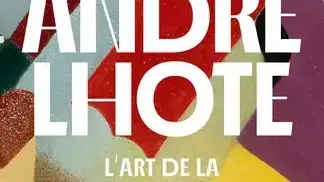
Signature "André Lhote - L'art de la controverse" de Françoise Garcia, Norma éditions, le 19 octobre 2026 à l'occasion de MaSH
Image


In the history of 20th-century applied arts, Gustave Gautier (1911–1980) occupies a unique position, at the crossroads between the Parisian avant-garde movements and the cultures of the Breton coast — he was particularly active in the Gulf of Morbihan. An architect, interior designer and furniture designer, trained at the École nationale supérieure des arts décoratifs, he championed the most progressive ideas and was a member of the Union des artistes modernes (UAM).
After spending five years as a prisoner of war, he went on to play a key role in the post-war Reconstruction and developed an original vision of housing, reconciling the rigour of the Modern Movement with comfort and a sense of décor, whilst, in certain projects, cultivating a form of regionalism attentive to local materials, customs and identities. In open, light-filled spaces, he revived the idea of a protective, warm and locally rooted interior, where colours and materials make a powerful statement. He thus conceived a new way of living, which he showcased on the Parisian scene, notably at the Salon des Arts Ménagers, where new ideas were then becoming widely accessible.
This monograph is the first study devoted to Gautier’s work. It draws in particular on extensive and previously unpublished family archives, which make it possible to reconstruct his career, his networks and his entire body of work with rare precision.






New book new


Favorites