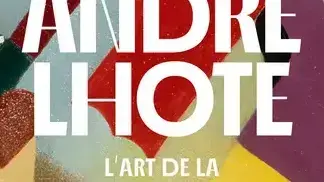
Signature "André Lhote - L'art de la controverse" de Françoise Garcia, Norma éditions, le 19 octobre 2026 à l'occasion de MaSH
Image


In the autumn of 1924, the first Surrealist Manifesto, written by André Breton, who became the movement’s leader, was published by Éditions du Sagittaire, run by Simon Kra. With it came the birth of a multidisciplinary, international art form employing a wide range of techniques, with groups and avant-garde movements in Belgium, Czechoslovakia, England, the Canary Islands, Belgrade, the United States and Latin America.
This definitive overview brings together all the movement’s iconic figures, including female artists who were long overlooked: Breton, Ernst, Magritte, De Chirico, Man Ray, Brassaï, Leonora Carrington, Dorothea Tanning, Dora Maar…
After tracing the origins of Surrealism back to Dada and the First World War, the book analyses the evolution of its artistic, theoretical, political and social aspects, distinguishing three major periods: the 1920s, the turn of the 1930s and the post-Second World War era. Particular emphasis is placed on recent developments in historiographical approaches: feminism, globalisation, the surrealist art market, and eco-surrealism. Finally, the revival of Surrealism through contemporary art—and in particular generative art using artificial intelligence and virtual reality and its worlds—offers a broader, international perspective on one of the most significant literary and aesthetic movements of the 20th century.







New book new


Favorites